Here is the Fast, Free news from all locations important to you. Read the most amazing honest, real news pertaining to business, technology, and travel from all over the planet. The news is free to read and watch on video for everyone of every age and location.
Latest Post
Believe it or not, using an iPod touch in 2019 is a lot of fun

The 2019 iPod touch
Todd Haselton | CNBC
If your kid is too young for an iPhone but might like a device that still sends iMessages, places FaceTime calls, streams music and can play games, you might want to consider Apple's new iPod touch, which is available now and starts at $199.
I bought one a couple of days ago to test out. It's kind of like a mini iPhone that can't place phone calls — though it can do FaceTime video chat — and only gets data over Wi-Fi. That means you don't have to pay for a data plan, but you can't use it anywhere you would an iPhone.
I like it a lot more than I thought I would, though as an owner of an iPad and an iPhone, I'm still trying to find out where it fits in my life. It's fun, but Apple isn't going to suddenly sell several million of these things unless there's some retro trend coming back I don't yet know about.
One other potential use: The iPod also makes an affordable option for business owners who need an iOS device to accept payments through an app like Square or PayPal.
Here's what you need to know about it.
What's good
The 2019 iPod touch
Todd Haselton | CNBC
I love how tiny the iPod touch is. It's about half as thin as my iPhone and has a tiny 4-inch screen, although I found it was still easy to type on. It has access to all of Apple's latest apps, like Apple News and even Apple TV. It's a bit tiny to watch movies on, but your kids might like it for YouTube or for watching cartoons.
The 2019 iPod touch
Todd Haselton | CNBC
I loaded mine up with tunes from Apple Music and found that the $199 32GB model was sufficient for storing enough playlists and albums to get me through a five-hour flight. I really don't think most people need more space here, since you can always stream music over Wi-Fi. But if you have a huge library of tunes you've already purchased, there's a 128GB model for $299 and a 256GB model that costs $400.
The 2019 iPod touch
Todd Haselton | CNBC
It has a headphone jack and comes with buds in the box, but I liked using the iPod touch with AirPods, which connect just as easily as they do with my iPhone and iPad. Since the iPod touch is nice and small, it's easy to grip and hit the volume keys, and control everything with just a single hand. Sometimes I have a hard time doing that with my much larger iPhone XS Max.
The 2019 iPod touch
Todd Haselton | CNBC
Battery life is alright if you're not using Wi-Fi, Bluetooth or streaming a bunch of music. But I found it fell down below half after my five-hour flight, so it's not as good as an iPhone or iPad, which have much bigger batteries.
Most importantly, it's just so light. I can carry a couple movies, my music library and my AirPods in my pocket without really feeling it there at all. I can't say the same about my huge (but beloved) iPhone XS Max.
What's bad
The 2019 iPod touch
Todd Haselton | CNBC
Apple didn't really update a whole lot here, other than add the newer processor originally used in the iPhone 7, which is itself already dated. So, in that sense, it feels a bit like recycled hardware. I noticed that loading apps was definitely slower than on my iPhone XS Max, and you shouldn't expect higher-end games to run as smoothly. And you don't get new features like wireless charging, which would have been great.
I also wish it had Touch ID or Face ID, since I'm just not used to pressing the home button and then having to enter in a 4-digit password to unlock a device any more. And, for a device so focused on music, I wish it had stereo speakers instead of the single down-firing one.
The front-facing camera isn't very good.
Todd Haselton | CNBC
The front-facing camera is just one megapixel, which is pretty much laughably bad on paper. I took a selfie with my editor outside a restaurant and thought it was fine, though blurry due to the lack of any optical image stabilization. Again, your kids might like it, but adults might prefer something better with portrait mode, like you'd get on an iPhone XS Max. The 8-megapixel camera on the back is just fine, and now supports augmented reality so you can use apps that let you drop digital objects into the real world. Kids might like Angry Birds AR, which lets you slingshot birds at bad guys on your desk, for example.
The 2019 iPod touch
Todd Haselton | CNBC
The screen is just OK. You can see the pixels, so it's not as sharp as Apple's screens on newer iPhones, or nearly as colorful. Movies and photos don't look as brilliant as they do on the more expensive OLED panels Apple uses on iPhones.
Finally, while I don't really want to pay for another data plan, it would be pretty cool to have the option to carry this anywhere and get internet access even when Wi-Fi isn't available, like you might with an LTE iPad. It seems like a missed opportunity to have a super-portable internet device.
Should you buy it?
The 2019 iPod touch
Todd Haselton | CNBC
You probably don't need to buy an iPod touch for yourself, unless you're like me and have a bit of nostalgia for the iPod and just want to use a super-mini version of your iPhone. Part of me wishes this was a full-fledged iPhone, though. It's so attractive at its size that, with a bit more battery life and better cameras, it could serve as a pretty compelling iPhone mini.
But — and I should warn that I don't have any — this might be a good option for kids who aren't old enough to own a phone yet. You'll be able to stay in touch with them over iMessage when they have Wi-Fi, or FaceTime, and at $200 it's cheaper than Apple's entry-level $329 iPad. But it still has a full browser, access to apps and games and will let them stream music and movies.
Read More
Power outage at LAX grounds flights and strands travelers

Ticket counters in LAX airport
Lawrence K. Ho | Los Angeles Times | Getty Images
A power outage at Los Angeles International Airport has stranded hundreds of travelers after it prompted airlines to cancel more than 50 flights and delay others scheduled for Thursday.
The more than three-hour outage Wednesday night was due to a problem at an offsite substation and power was restored to some facilities as late as 10:45 p.m. PDT, the airport said.
Southwest Airlines temporarily halted flights to and from LAX on Thursday through 8 a.m. PDT, after it canceled about 40 flights on Wednesday night, spokeswoman Michelle Agnew said. Eleven Southwest flights were canceled on Thursday, the airport said.
The Transportation Security Administration was planning to rescreen travelers, a process the airport said would take around an hour. Law enforcement cleared the terminal to conduct a security sweep, sending travelers to public areas.
"An airline granted passengers whose flights were cancelled access to their checked bags, resulting in the unintentional introduction of prohibited items into the secure area of the airport," the TSA said. "Out of an abundance of caution, TSA leadership at LAX made the decision to re-screen the passengers."
United Airlines canceled four flights on Wednesday night and said it had to divert 11 others.
A half-day power outage at Hartsfield-Jackson Atlanta International Airport in December 2017 prompted airlines to cancel more than 1,100 flights, stranding thousands of travelers and raising concerns about airport infrastructure.
Read More
Russia's pivot towards China could damage ties with Europe, Belgium's top official says

Russia might be enjoying a blossoming relationship with China but it should beware drifting away from its neighbor Europe in the process, according to Belgium's deputy prime minister.
Russia's international relationships could be seen as ones of love and hate currently, with tense and fractious relations with the U.S. and Europe and increasingly warmer relations with China.
The apparent "special relationship" between Russian President Vladimir Putin and Chinese President Xi Jinping was conspicuous at the start of Xi's three-day state visit to Russia Wednesday as he praised Putin and pledged to deepen Sino-Russian cooperation.
Xi described Russian President Vladimir Putin as his "best friend" on Wednesday and vowed to foster deeper diplomatic and trade relations between the countries, a move that comes as both Russia and China's relations with the U.S. remain tense amid U.S. sanctions on the former and tariffs on the latter.
Russia's apparent ease with cozying up to China is likely to be closely watched by the U.S. and Europe - both of which have strained relationships with Russia.
Both the U.S. and EU have imposed sanctions on Russia for its annexation of Crimea from Ukraine in 2014, role in a pro-Russian uprising in east Ukraine, and for U.S. election interference and the poisoning of former double agent Sergei Skripal with a nerve agent in the U.K.
Ukraine continues to be a source of tension and turbulence. Europe has tried to broker a peace deal (known as the "Minsk agreements") between Russia and Ukraine over contested territory in the east of the country but both sides accuse the other of contravening the accords, and the peace is fragile at best.
In the meantime, Europe's sanctions on Russia are expected to be rolled over as they are tied to the complete implementation of the Minsk agreements.
"Russia must also be aware that doing business with Europe and solving the problems that are in the Minsk agreements are not only very positive for Russia but also for Europe," Kris Peeters, deputy prime minister and economy minister of Belgium, told CNBC Thursday.
He noted that while Russia might be looking to China for friendship and an economic boost, it should not neglect its neighbor Europe.
"The President of China is here to say to the world, 'Ok, we can do business,' but Russia must be aware that Europe is very close, very nearby to Russia and that when there is an agreement over the Minsk element, we can do business again." he told CNBC's Geoff Cutmore at SPIEF.
"My conviction is that the relationship between Europe and Russia is a very important one, when you look to history we are very close. Of course, the problems with Ukraine we can solve that with dialog and respect for each other – but if that's not the case we need to persuade Putin and other ministers to come to the table and find other solutions."
Read More
Marriott CEO: Chinese travelers 'don't feel as welcome' in the US due to trade tensions
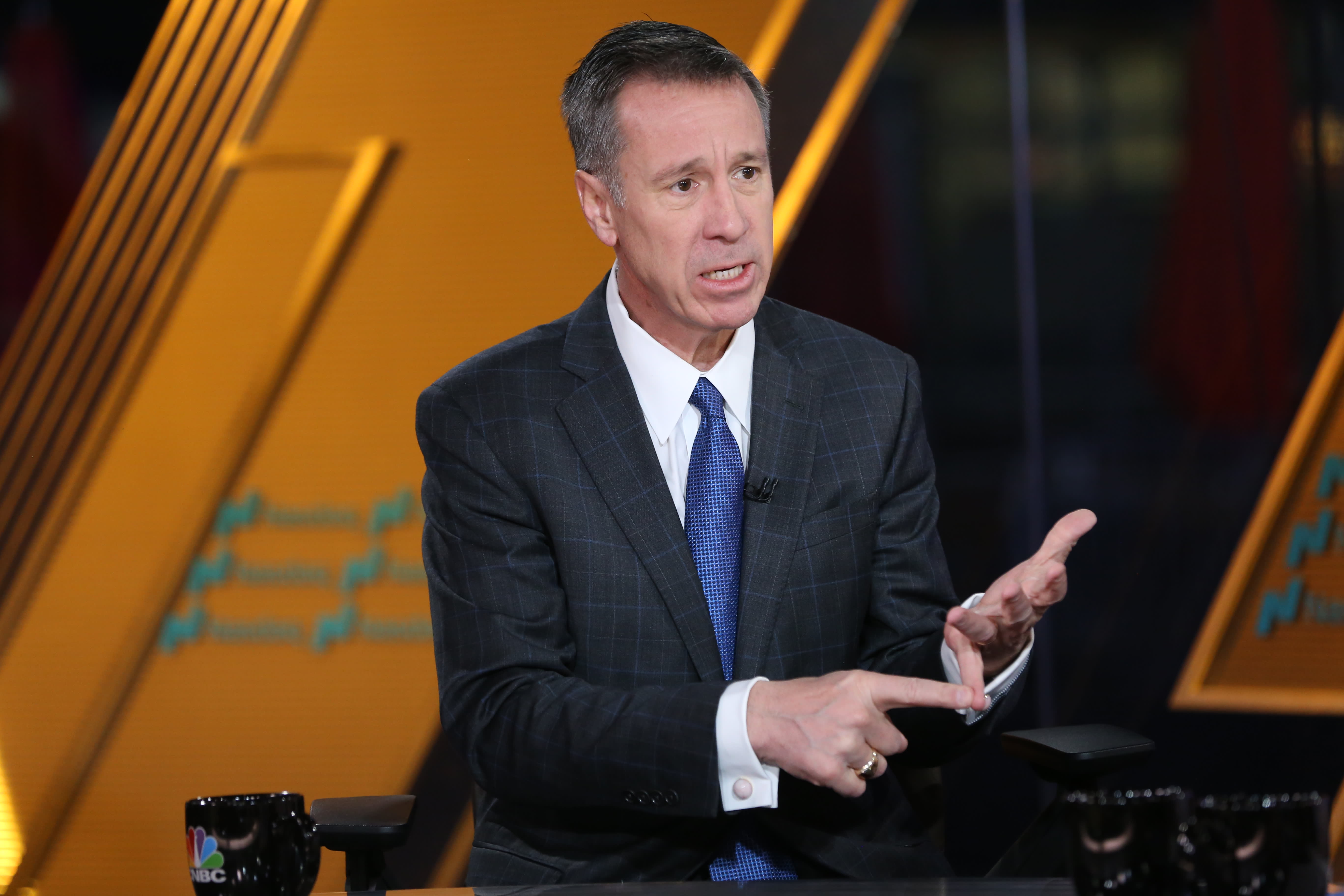
Chinese travelers are showing some reluctance to vacation in the U.S. due to the trade war between Washington and Beijing, Marriott International CEO Arne Sorenson told CNBC on Monday.
"They don't feel as welcome in the United States," said Sorenson, saying their apprehension is "affecting the coastal markets," such as New York and Los Angeles, the most.
However, Sorenson said on "Squawk Box" that with hindsight he would not have done anything differently in terms of his company's strategy in China.
"I don't know that we'd change anything about the last six months," he said, despite the U.S.-China trade and economic disputes becoming more entrenched over that time period.
"We're about 350 [or] 360 hotels open in China. We're opening one or two a week. They tend to be at the high end. We have a very strong business in China," he explained. "They own the real estate. We manage the real estate for them."
Sorenson said the U.S.-China trade war is "relevant in the way we worry about it," but the hotel sector has not really been impacted. "We don't need protection for the hotel business."
On Sunday, China took a firm official stance against the U.S. on trade, issuing a white paper that illustrates a widening gap between the two sides. The document labels the U.S. as an untrustworthy negotiator, with China's vice commerce minister saying at a news conference, "the U.S. has backtracked, and when you give them an inch, they want a yard."
Last month, President Donald Trump announced that tariffs rates on $200 billion worth of Chinese goods would go up from 10% to 25%. The U.S. has also begun investigating whether $300 billion of other Chinese goods could be subject to tariffs. China has put reciprocal tariffs on U.S. products.
In a widening scope beyond trade, the U.S. also put Chinese telecom giant Huawei on an list that essentially prevents it from conducting business with U.S. companies.
As for the American economy, Sorenson said: "We're about two-thirds U.S., a third the rest of the world. I think when you look at 'the economy' broadly at various places around the world, the U.S. is steady but moderate."
The economy is not as strong as the market first thought in January and February and not as weak as the market has been signalling lately, he said.
However, Sorenson said: "I think the consumer is still fairly robust. I think we're seeing international rivals to the United States decline or decline relative to the rest of the world."
Earlier this month, Marriott announced that Sorenson was diagnosed with stage 2 pancreatic cancer, but will continue in his role while being treated.
He told CNBC on Monday: "I feel great. It's one of the things that makes this battle a little bit surreal is I almost won't even know I was fighting it."
"But I'm in the midst of round three, it starts tomorrow, of chemo. It's good to be engaged in the battle. We'll take it one day at a time. I feel great. I'm working everyday," Sorenson added.
CNBC's before the bell news roundup
SIGN UP NOW
By signing up for newsletters, you are agreeing to our Terms of Use and Privacy Policy.
Read More
Google appeals $1.7 billion EU antitrust fine over 'illegal' advertising practices

European Union Competition Commissioner Margrethe Vestager gives a joint press at the EU headquarters in Brussels on July 18, 2018. -
John Thys | AFP | Getty Images
Google has appealed a $1.7 billion fine from the European Commission for stifling competition in the online advertising industry, the company said Wednesday.
In March, the executive arm of the European Union slapped Google with its third antitrust fine, this time for abusing its dominance in the online advertising market through its AdSense business. The EU said Google's practice of restricting online search advertisements from competitors was "illegal" under the bloc's antitrust rules.
The Telegraph first reported that Google had filed an appeal for the latest fine in the General Court of the European Union in Brussels on Tuesday. Google confirmed the action in an email to CNBC Wednesday.
A European Commission spokesperson told CNBC: "The Commission will defend its decision in Court."
Since 2017, the EU has charged Google with two other fines totaling nearly $8 billion for anti-competitive practices with its Android devices and comparison shopping service, which the company also appealed.
Google is facing mounting regulatory pressure around the globe with the U.S. Justice Department reportedly planning an antitrust investigation into Google related to business practices in its search and other businesses.
Shares of Google parent company Alphabet have tumbled around 5% since the news was first reported last Friday by the Wall Street Journal. Alphabet shares traded slightly higher in extended hours Wednesday.
Read More
BMW and Jaguar Land Rover to jointly develop electric car parts

A worker checks the frame of a BMW automobile along the production line at the BMW plant in Munich, Germany.
Martin Leissl | Bloomberg | Getty Images
BMW and Jaguar Land Rover on Wednesday said they will jointly develop electric motors, transmissions and power electronics, unveiling yet another industry alliance designed to lower the costs of developing electric cars.
Both carmakers are under pressure to roll out zero-emission vehicles to meet stringent anti-pollution rules, but have struggled to maintain profit margins faced with the rising costs of making electric, connected and autonomous cars.
"Together, we have the opportunity to cater more effectively for customer needs by shortening development time and bringing vehicles and state-of-the-art technologies more rapidly to market," said BMW board member Klaus Froehlich.
BMW and Jaguar Land Rover said they will save costs through shared development, production planning and joint purchasing of electric car components. Both companies will produce electric drivetrains in their own manufacturing facilities, BMW said.
The BMW Jaguar Land Rover pact comes as rivals FiatChrysler and Renault explore a $35 billion tie-up of the Italian-American and French carmaking groups.
Nick Rogers, Jaguar Land Rover's engineering director said, "We've proven we can build world beating electric cars but now we need to scale the technology to support the next generation of Jaguar and Land Rover products."
BMW was in talks with rival Daimler about developing electric car components but was also in discussions with Jaguar Land Rover, a company it once owned, to explore an alliance on engines.
BMW already has a deal to supply an 8 cylinder engine to Jaguar Land Rover.
Carmakers are increasingly open to sharing electric car parts because the technology is expensive and because customers no longer buy a car based on what engine a vehicle has.
"Carmakers are much less precious about sharing electric car technology because it is much harder to create product differentiation with electric car tech. They all accelerate fast, and everybody can do quality and ride and handling," according to Carl-Peter Forster a former chief executive of Tata Motors and a former BMW executive.
Jaguar Land Rover is still run by former BMW managers, including Ralf Speth the company's chief executive who spent 20 years at BMW prior to joining JLR, and Wolfgang Ziebart, the engineer who oversaw Jaguar's iPace electric car program, who is a former head of research and development at BMW.
Jaguar Land Rover said it would redouble efforts to cut costs after it posted a $4 billion loss earlier this year, hit by a downturn in demand for sports utility vehicles in China and a regulatory clampdown on diesel emissions.
BMW bought Britain's Rover Group, which included the Jaguar and Land Rover brands, for 800 million pounds in 1994 only to sell Jaguar Land Rover to Ford in March 2000 for $2.7 billion. In 2008 India's Tata Group bought Jaguar and Land Rover from Ford for $2.3 billion.
Read More
Powered by Blogger.